Showing posts with label Booker Challenge. Show all posts
Thursday, February 17, 2011
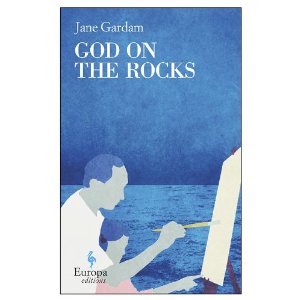
God on the Rocks: Review
Hmmm...so writing reviews of books that you didn't really enjoy reading turns out to be not as much fun. Actually, it's overstating things to say that I didn't enjoy God on the Rocks at all. It's just that I've enjoyed Jane Gardam's other books so much that this one felt like a let-down. In the interest of making prejudices clear, I really have something against books about children. I mean, I like children. I'm sure they would have interesting things to say, if they ever wrote novels themselves. But I kind of hate reading adults' interpretations of a child's world. In most bildungsroman, I really only like it once the narrator has reached, say, fifteen.
While nearly all child narrators are somehow precocious (otherwise they wouldn't know all of the big words that their adult puppetmasters force upon their lips), they do provide a tempting canvas on which to paint a distorted picture of the adult world. Children are credited with understanding the world in a unique and prescient way; because they don't always understand what is going on around them, they can give us fresh interpretations. But again, I usually come back to the cynical position that we are not actually seeing things through the child's lens of confusion and wonder, but rather from the artificial construct of that lens by the author. I don't know, maybe that doesn't bother other people. Maybe I need to get over it.
Anyway, rant against pseudo-childlike insight aside, I just didn't think that this was Gardam's best work. Margaret Marsh, the young girl protagonist, reminded me a little bit of surly Mary Lennox from The Secret Garden, but without the eventual sunny breakthrough. Her mother has just had a baby, and Margaret is disgusted both by the infant and her mother's obvious infatuation with him. Because of the baby, though, Mrs. Marsh decides that Margaret deserves a special treat each week, as a solace for the reduction in motherly attention. The treat takes the form of trips to the seaside with the Marsh's servant-girl, Lydia. While the Marshes are strict and upright Christians, particularly fanatical Mr. Marsh, Lydia plays up her sensuality with tight satin dresses and speaks coarse Cockney English. Margaret begins a period of growth and change on these day-trips, first in the exposure to some kind of sexual relationship between Lydia and a gardener on an old estate, and then through her experience at the estate itself. Unsupervised while Lydia conducts her love affair, Margaret wanders onto the private property and its strange denizens. At this point in the story, perspectives begin to open up and we learn that the estate begins to Rosalie Frayling, now a mummified old woman, who has opened up the house and grounds to mental patients. Unbeknownst to either Margaret or Rosalie, Mrs. Marsh was once engaged to be married to Rosalie's son, but the affair was quashed by Rosalie's outrage at the idea of her son abasing himself to marry the daughter of the postman. Meanwhile, Mrs. Marsh decides to reconnect with this son, who has moved back into the village. How these pieces all come together in a fairly natural way demonstrates Gardam's sure hand with plot.
Gardam is also a beautiful writer, and she does justice to the setting as well as the complex emotional lives of her characters. In the end though, I wasn't fully moved by the characters. Blame my irrational hatred of child protagonists, if you want. But I'd pick up Old Filth or Man in the Wooden Hat first.
Monday, January 24, 2011
The Glass Room by Simon Mawer: Review

I admit that I picked this book up because it was sitting on the "Free Book" table outside of my office and was persuaded to read it because it was a Booker finalist in 2009 (and thus a candidate for Complete Booker inclusion!). It is another of the seemingly endless stream of books written about World War II and its lead-up and aftermath. Admittedly, this is a time period with amazing narrative potential; nearly every major country in the world has its own story to tell.
This particular book centers around the story of a Czech couple who begin their life together in the late 1920s. I am personally fascinated with this period and the literature produced both within and about it--there is a certain pleasurable omniscient doom that comes with reading about that period before the Second World War went and made a mockery of the First World War's claims to be "Great." Liesel and Viktor Landauer are confident in their future and the improvements that are sure to come, and they make this hope manifest in the designing and building of their dream home. They hire a visionary architect, von Abt, to design a space free of all ornamentation, a house that will liberate them from all of the hindrances of the past. In an early conversation, Viktor and von Abt discuss the value of modern over neo-Gothic architecture. Von Abt says the true ideal is the Japanese house of paper, which does not injure its inhabitants if it happens to fall down. But here is the novel's central problem: how do you move from houses of stone to houses of paper, from the old to the new, without people getting crushed in the process?
Viktor and Liesel see their home as its own revolution. They "watched their future world growing around them and they thought that it was a kind of perfection, the finest instrument for living." But quickly the reader understands that the glass walls of the house give only a false sense of transparency.
They crowd into the space of the Glass Room like passengers on the observation deck of a luxury liner. Some of them maybe peering out through the windows onto the pitching surface of the city, but, in their muddle of Czech and German, almost all of ignorant of the cold outside and the gathering storm clouds, the first sigh of the tempest that is coming.
This counterfeit safety is revealed first in Viktor and Liesel's relationship and then slowly through their entire world. Viktor is Jewish and Liesel Christian, and though Viktor begins to understand their vulnerability as the Nazis cut a wider and wider swath, Liesel maintains her belief in invisible lines. "The story is there, not here" she says, "It is over the border in another country, another world, another universe." Of course, those borders reveal themselves to be as fragile as glass.
Mawer's book convincingly explores these large ideas, though at times his personification of the Glass Room begins to grate. Ultimately, it is the inhumanity of the house that seems significant. Viktor believes that the value of the house lies in the fact that "there are no disturbing curves to upset the rectilinear austerity of the space. There is nothing convolute, involute, awkward, or complex." In other words, there is no life. The house is just an object, a modern statement that becomes a relic by the book's close. The people, the living, continue to struggle on.
*If anyone is interested in seeing the real "Landauer House", actually the Villa Tugendhat in Brno, Czech Republic, click here.
Friday, January 14, 2011
Complete Booker Introduction
Cross-post from The Complete Booker blog:
I'm new to this world of book blogs, so I thought that the organizing principle of a reading challenge would be helpful! By very unofficial accounting, I think I've enjoyed Booker winners and nominees more than those of other prizes, so I thought this would be a great place to start. I have an MA in English Literature and am currently working in academic administration, so I miss the formal contact with reading and writing. Yes, I'm the kind of person who thrills to the sight of a good syllabus.
Booker winner/nominees that I've read:
The Sea, the Sea by Irish Murdoch (1978 winner)
Midnight's Children by Salman Rushdie (1981 winner)
Hotel du Lac by Anita Brookner (1984 winner)
Flaubert's Parrot by Julian Barnes
The Satanic Verses by Salman Rushdie*
The Remains of the Day by Kazuo Ishiguro (1989 winner)
Jigsaw by Sybille Bedford*
Possession by A.S. Byatt* (1990 winner)
The Stone Diaries by Carol Shields
A Fine Balance by Rohinton Mistry
The God of Small Things by Arundhati Roy (1997 winner)
Amsterdam by Ian McEwan (1998 winner)
Disgrace by J.M. Coetzee (1999 winner)
English Passengers by Matthew Kneale
Atonement by Ian McEwan
Life of Pi by Yann Martel (2002 winner)
Unless by Carol Shields
Fingersmith by Sarah Waters*
The Line of Beauty by Alan Hollinghurst (2004 winner)
Cloud Atlas by David Mitchell*
The Master by Colm Toibin
The Sea by John Banville (2005 winner)
Arthur and George by Julian Barnes*
The Accidental by Ali Smith
On Beauty by Zadie Smith
The Inheritance of Loss by Kiran Desai* (2006 winner)
The Night Watch by Sarah Waters
The Gathering by Anne Enright (2007 winner)
Wolf Hall by Hillary Mantel* (2009 winner)
*favorite
On my list of Booker winners/nominees to read this year:
1. God on the Rocks by Jane Gardam (1978 shortlist)- I just love everything she writes. The Man in the Wooden Hat was one of the best books I read last year.
2. Oscar and Lucinda (1988 winner) or Parrot and Olivier in America (2010 shortlist) by Peter Carey--I've never read any Carey and it seems about time I should start. Any recommendations?
3. Amongst Women by John Gahern (1990 shortlist)-I read a glowing review of this somewhere this year, after which I put in a bit of (failed) effort tracking it down at the library. This year I will prevail!
4. The Conservationist by Nadine Gordimer (1974 winner)--Another author I've always meant to read, especially after living in South Africa (well, Lesotho) for a year.
5. In a Strange Room by Damon Galgut (2010 shortlist)--This is another Lesotho-influenced selection, as the protagonist travels through Lesotho in one of the stories. Most people can't pronounce the country's name, much less write about it, so I'm very interested to see what Galgut has to say about this desolate and remote little enclave.
6. The Glass Room by Simon Mawer (2009 shortlist)--To be honest, this is a pick because I found it in the "free book" pile that sits outside of our department office. It does look good, though.
7. The Little Stranger by Sarah Waters (2009 shortlist)--I've really enjoyed the Sarah Waters books I've read, so I might overcome my aversion to anything that tends to make me frightened to be in my apartment alone at night.
I'm new to this world of book blogs, so I thought that the organizing principle of a reading challenge would be helpful! By very unofficial accounting, I think I've enjoyed Booker winners and nominees more than those of other prizes, so I thought this would be a great place to start. I have an MA in English Literature and am currently working in academic administration, so I miss the formal contact with reading and writing. Yes, I'm the kind of person who thrills to the sight of a good syllabus.
Booker winner/nominees that I've read:
The Sea, the Sea by Irish Murdoch (1978 winner)
Midnight's Children by Salman Rushdie (1981 winner)
Hotel du Lac by Anita Brookner (1984 winner)
Flaubert's Parrot by Julian Barnes
The Satanic Verses by Salman Rushdie*
The Remains of the Day by Kazuo Ishiguro (1989 winner)
Jigsaw by Sybille Bedford*
Possession by A.S. Byatt* (1990 winner)
The Stone Diaries by Carol Shields
A Fine Balance by Rohinton Mistry
The God of Small Things by Arundhati Roy (1997 winner)
Amsterdam by Ian McEwan (1998 winner)
Disgrace by J.M. Coetzee (1999 winner)
English Passengers by Matthew Kneale
Atonement by Ian McEwan
Life of Pi by Yann Martel (2002 winner)
Unless by Carol Shields
Fingersmith by Sarah Waters*
The Line of Beauty by Alan Hollinghurst (2004 winner)
Cloud Atlas by David Mitchell*
The Master by Colm Toibin
The Sea by John Banville (2005 winner)
Arthur and George by Julian Barnes*
The Accidental by Ali Smith
On Beauty by Zadie Smith
The Inheritance of Loss by Kiran Desai* (2006 winner)
The Night Watch by Sarah Waters
The Gathering by Anne Enright (2007 winner)
Wolf Hall by Hillary Mantel* (2009 winner)
*favorite
On my list of Booker winners/nominees to read this year:
1. God on the Rocks by Jane Gardam (1978 shortlist)- I just love everything she writes. The Man in the Wooden Hat was one of the best books I read last year.
2. Oscar and Lucinda (1988 winner) or Parrot and Olivier in America (2010 shortlist) by Peter Carey--I've never read any Carey and it seems about time I should start. Any recommendations?
3. Amongst Women by John Gahern (1990 shortlist)-I read a glowing review of this somewhere this year, after which I put in a bit of (failed) effort tracking it down at the library. This year I will prevail!
4. The Conservationist by Nadine Gordimer (1974 winner)--Another author I've always meant to read, especially after living in South Africa (well, Lesotho) for a year.
5. In a Strange Room by Damon Galgut (2010 shortlist)--This is another Lesotho-influenced selection, as the protagonist travels through Lesotho in one of the stories. Most people can't pronounce the country's name, much less write about it, so I'm very interested to see what Galgut has to say about this desolate and remote little enclave.
6. The Glass Room by Simon Mawer (2009 shortlist)--To be honest, this is a pick because I found it in the "free book" pile that sits outside of our department office. It does look good, though.
7. The Little Stranger by Sarah Waters (2009 shortlist)--I've really enjoyed the Sarah Waters books I've read, so I might overcome my aversion to anything that tends to make me frightened to be in my apartment alone at night.
Subscribe to:
Posts (Atom)
The Illiterate Peanut by Bridget Rector is licensed under a Creative Commons Attribution-NonCommercial-NoDerivs 3.0 Unported License.
